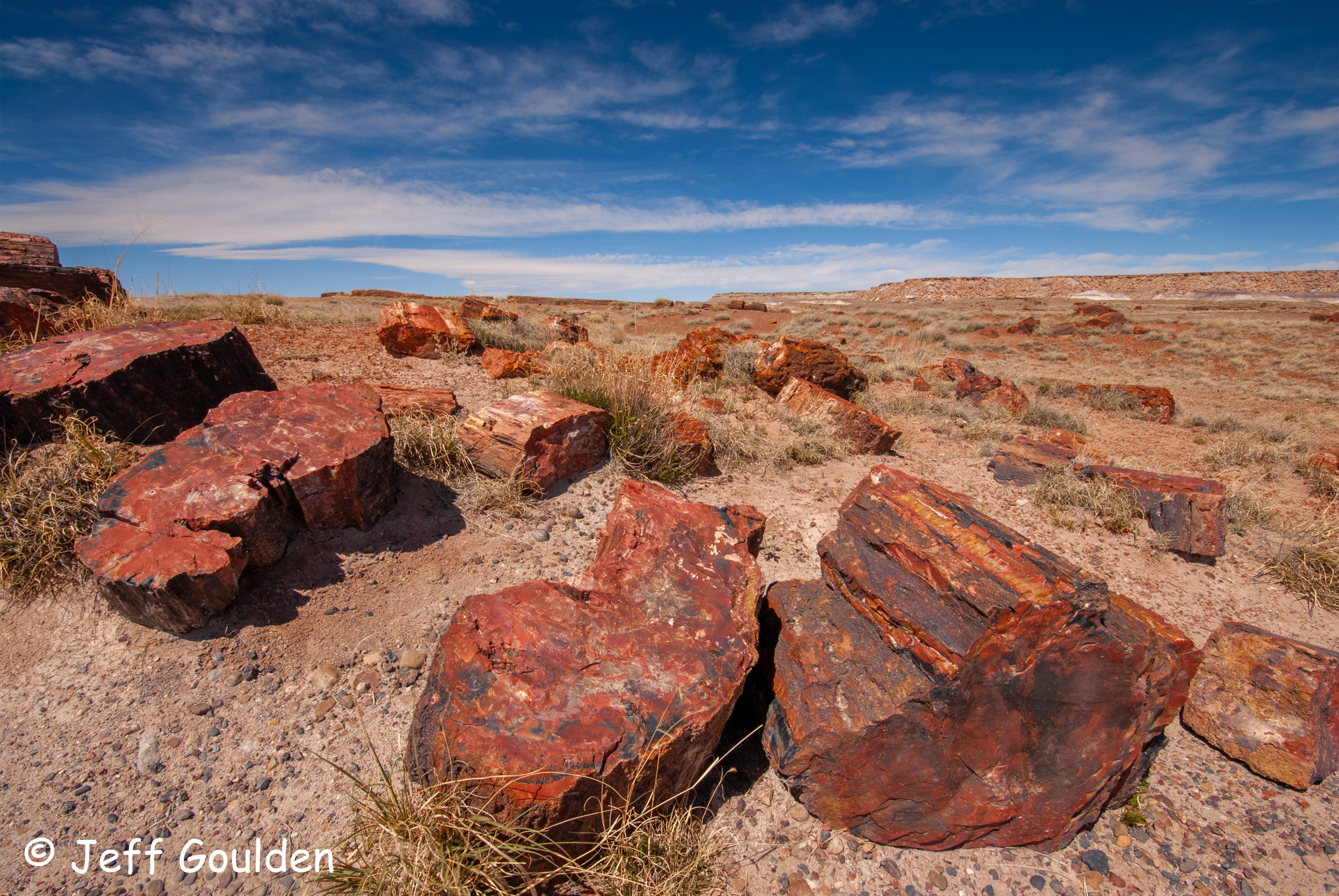
A Childhood Misconception
When I was a young boy, the words Petrified Forest painted a picture in my mind of towering trees frozen in stone.
Having trouble viewing this email? Read it in your browser here.
My father and I once went on a road trip through Central Washington State that led us to Ginkgo Petrified Forest above the Columbia River. I already knew what a ginkgo tree looked like, so I naturally expected to see an ancient forest with standing trees turned to stone. Instead, I discovered that petrified wood is found as fossilized logs lying on the ground. That childhood visit taught me what a petrified forest really looked like.
So, when I eventually visited Petrified Forest National Park in northern Arizona, I knew that I wouldn’t find a forest of standing stone trees. What I wasn’t prepared for was everything else I found. The park stretches through part of the Painted Desert of Northern Arizona. It also contains ancient pueblos and petroglyphs, colorful badlands, a preserved section of historic Route 66 and one of the largest collections of petrified wood in the world. The name Petrified Forest barely hints at the diversity of landscapes and history waiting beyond the entrance gate.
At the entrance gate, a park ranger asked me if I knew the “Golden Rule.” “Sure,” I said. “Do unto others as you would have them do unto you.” “Wrong,” said the ranger. Around here, the Golden Rule is, “Don’t remove any petrified wood from the park.”
Apparently, there is a heavy fine and possible jail time if you make off with any petrified wood. Good to know!
What I expected to be a short visit to see some petrified wood actually became a journey through millions of years of geology and thousands of years of human history.
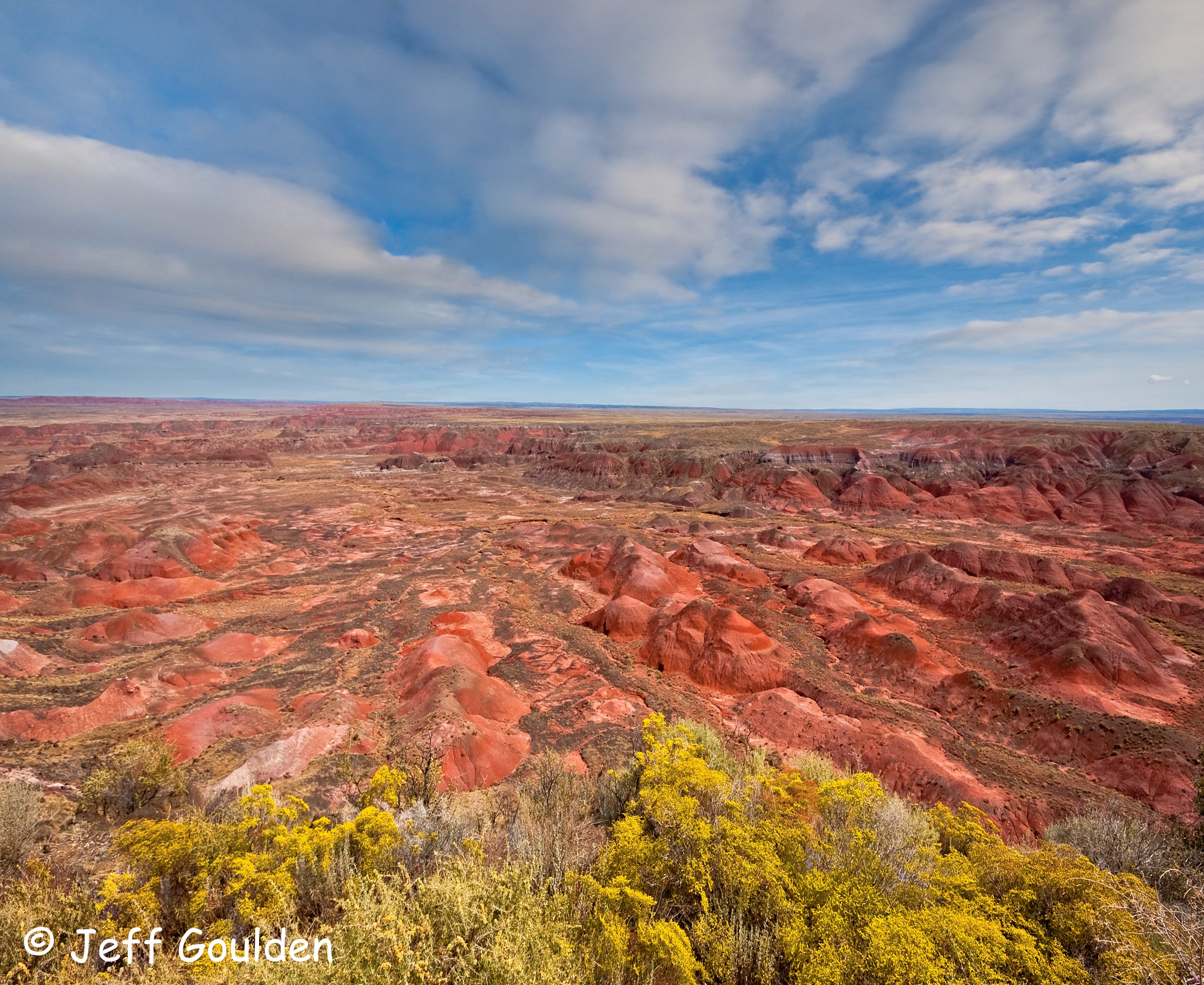
A Landscape Painted by Time
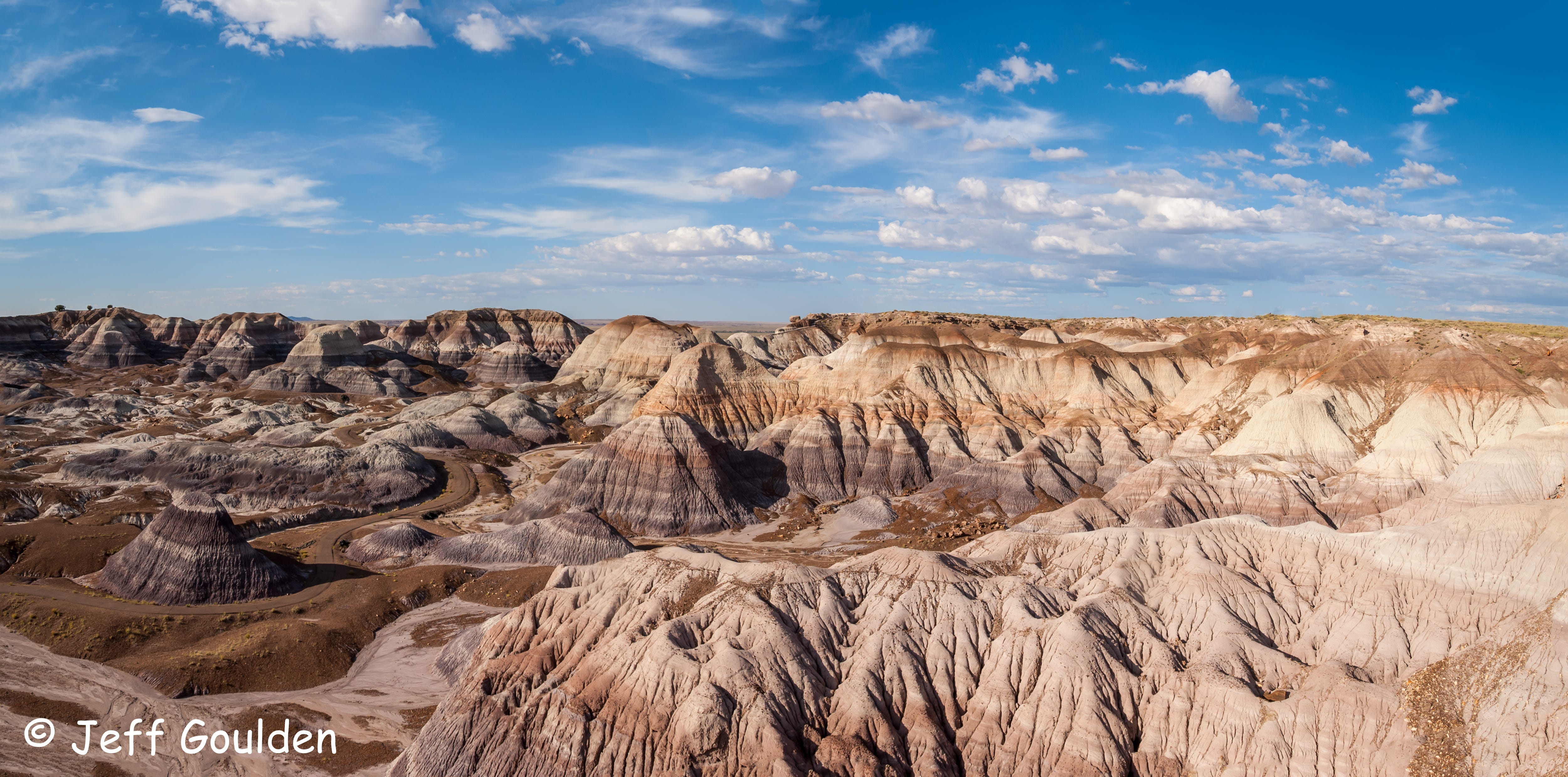
When I first entered the park, the Painted Desert lay before me, stretching across the horizon in broad bands of red, orange, pink and muted earth tones. From Tiponi Point, the Painted Desert extends north far beyond the park boundary, covering a large portion of the Colorado Plateau. Much of the landscape here is part of the Chinle Formation, whose colorful sediments were deposited more than 200 million years ago during the Triassic Period.
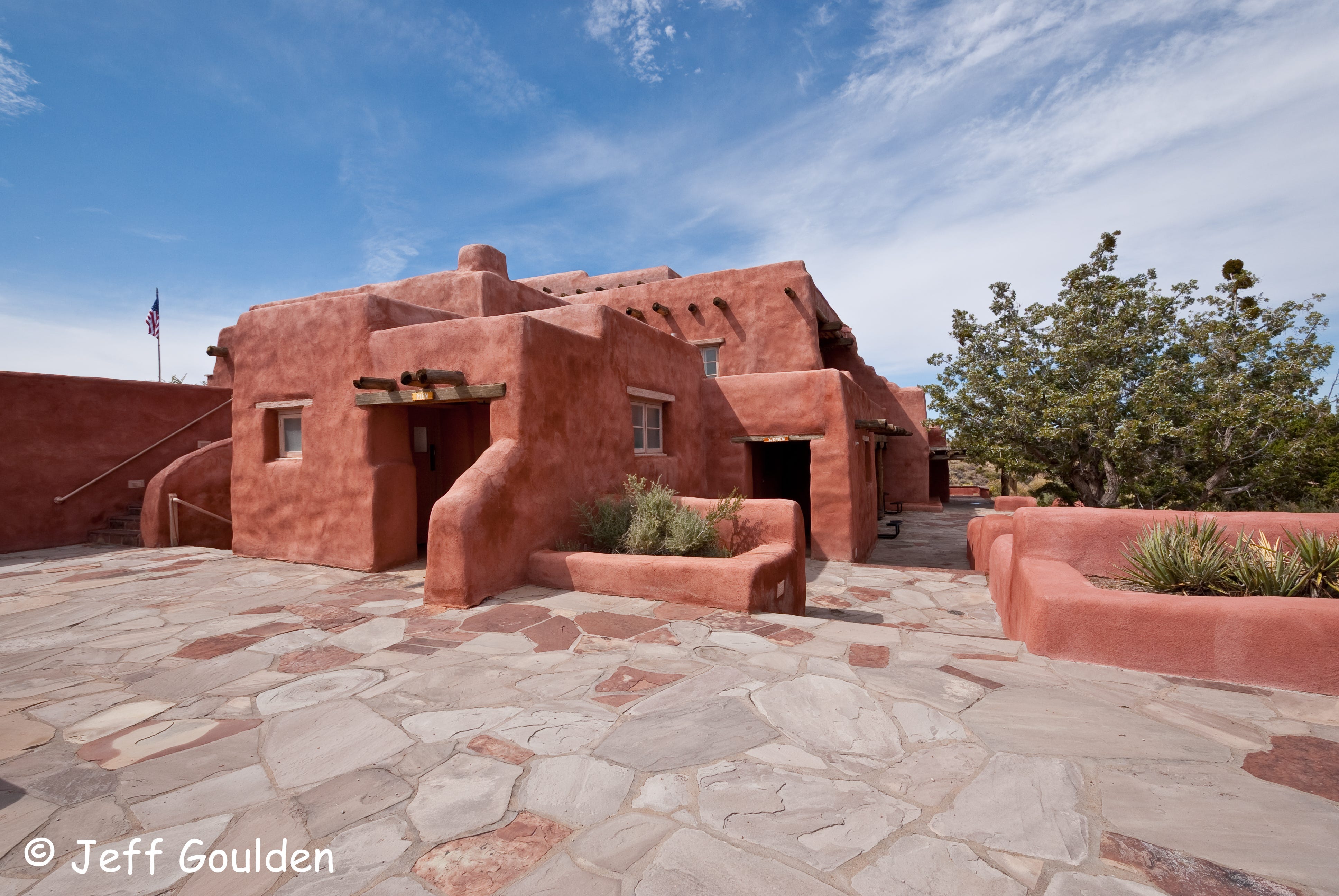
Just north of Tiponi Point is the Painted Desert Inn, another reminder that people have been passing through this landscape for a long time. The original inn was built in the 1920s and later became part of the history of the national park and Route 66. Today, the restored building serves as a reminder of an era when travelers crossed northern Arizona by way of the Mother Road.
Leaving the inn, the road loops back toward the south. Before long, another piece of history appears.
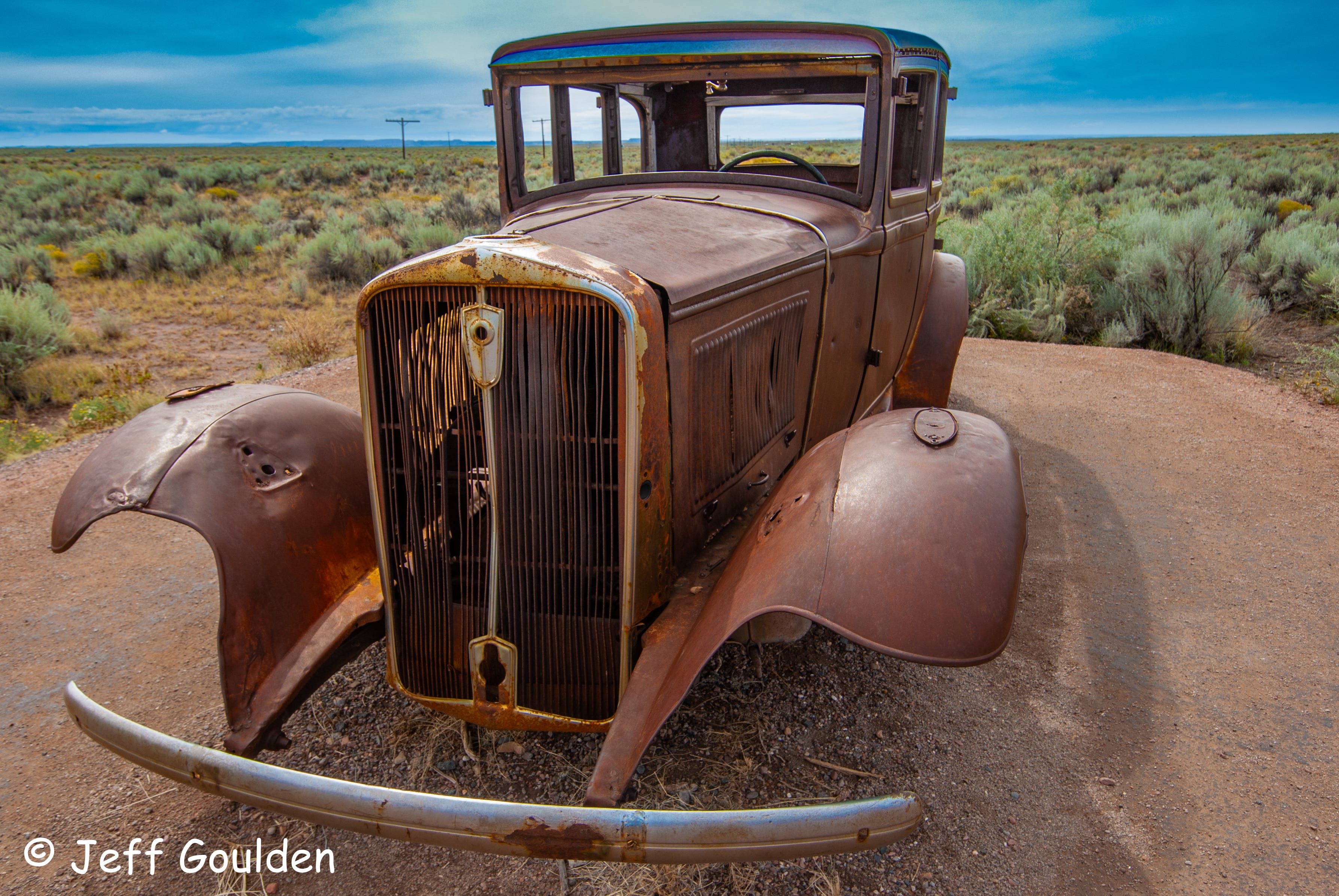
The Mother Road
An abandoned section of historic U.S. Highway 66 passes through Petrified Forest National Park, making it the only national park in the country containing a section of the Mother Road. Established in 1926, Route 66 is celebrating its 100th anniversary this year. The overgrown right-of-way and telephone poles remain, along with a rusted 1932 Studebaker that serves as a reminder of the travelers who once crossed this landscape.
It seems almost out of place among landscapes shaped millions of years ago, but perhaps that is what makes it interesting. For a short stretch, mid twentieth-century America sits beside a landscape that was already ancient when Route 66 was built.
People in an Ancient Landscape
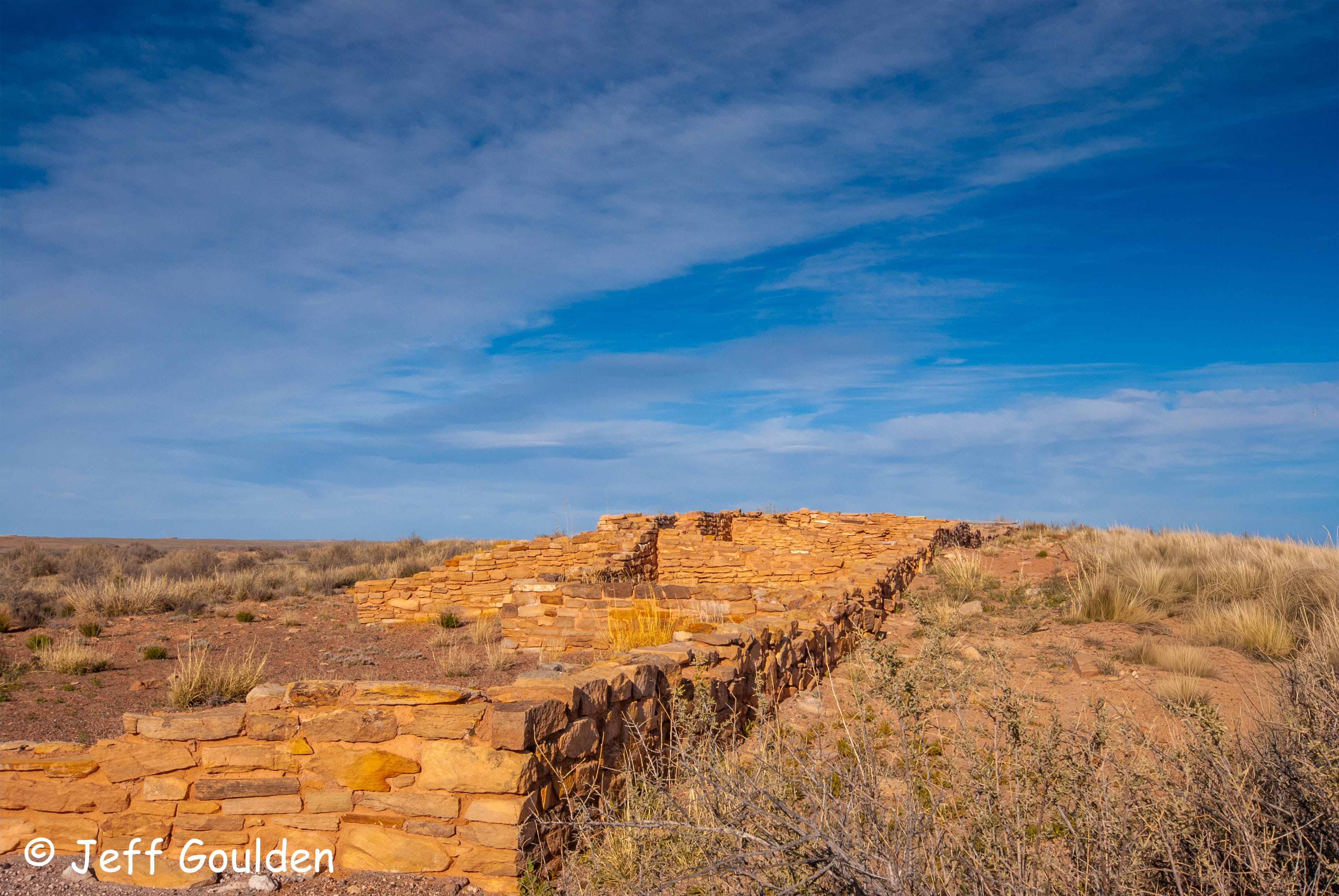
Farther south, at Puerco Pueblo, the story reaches much further back.
People have lived in this region for thousands of years. The Ancestral Puebloans built communities, raised families, grew crops and adapted to a difficult environment.
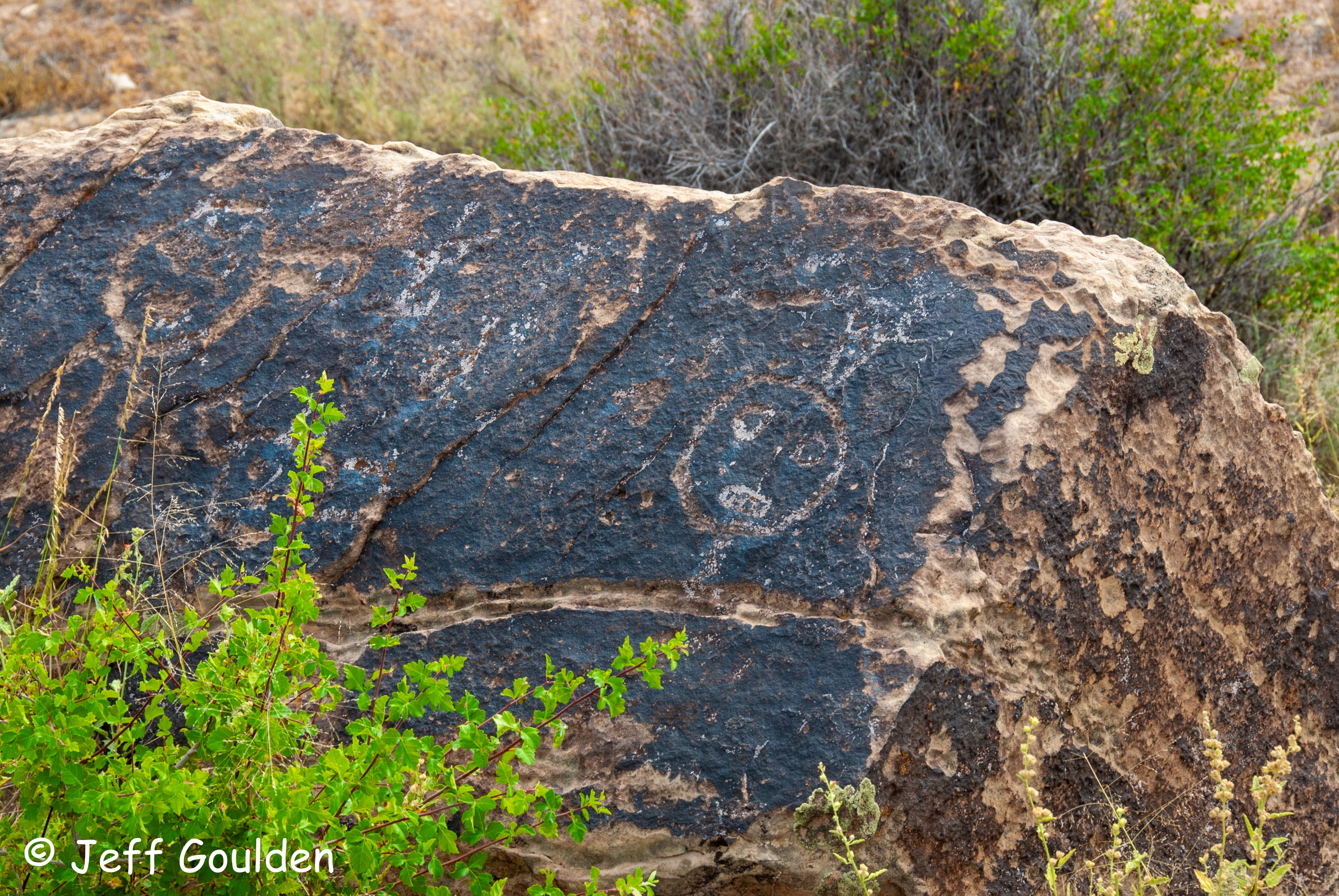
At Puerco Pueblo, petroglyphs remain carved into the dark, varnished surface of the sandstone. One circular image is identified on a sign as a Kachina, based on interpretations by modern Indigenous communities. But we should be cautious about assuming that we know exactly what an ancient artist intended. We can look at these images, document them and learn from contemporary Indigenous communities, while recognizing that the people who created them left no written explanation.
Some things from the past are better approached with curiosity and respect than certainty.
Walking Through Time
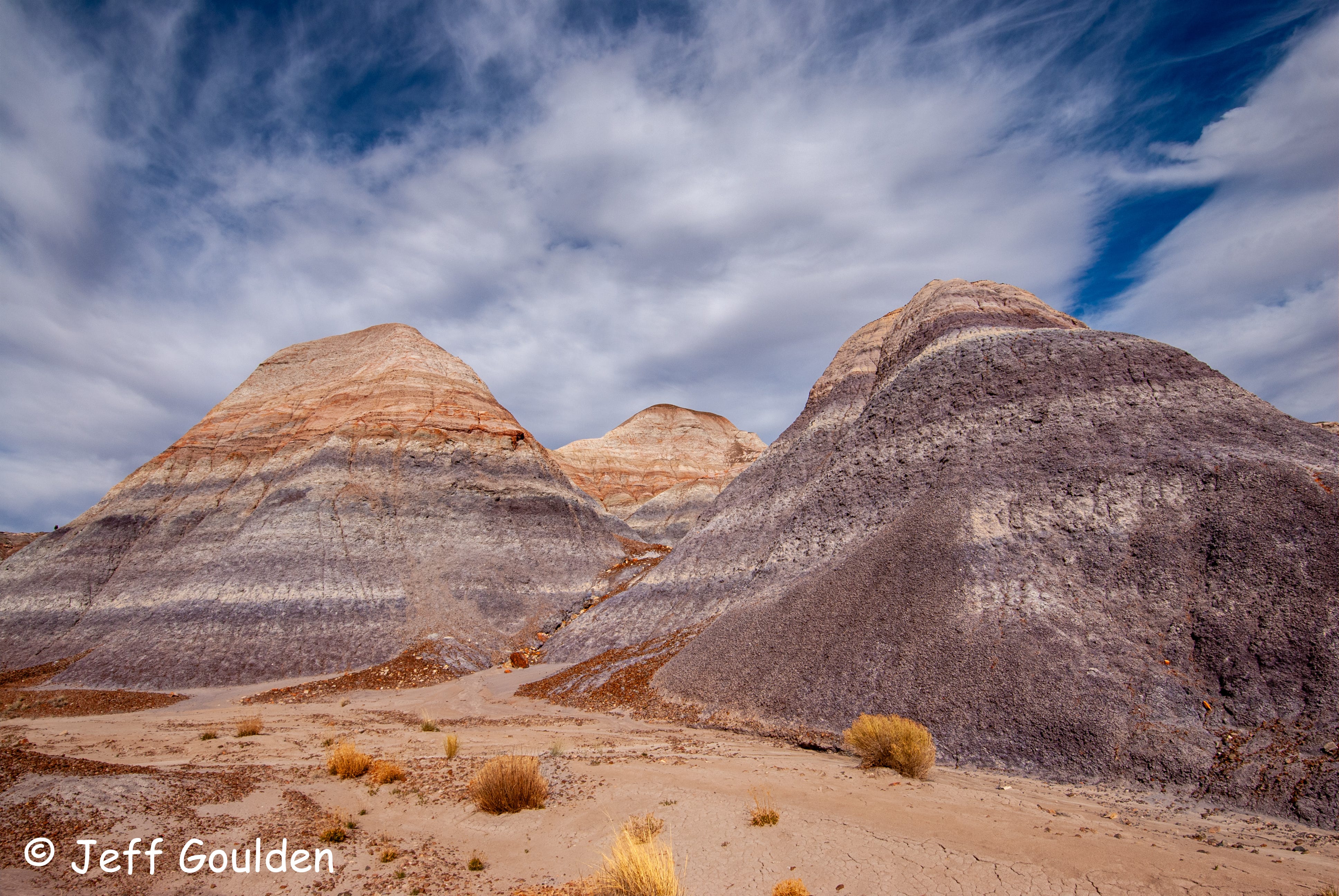
A little farther south, at Blue Mesa, the landscape changes dramatically.
Walking the trails of Blue Mesa, I felt like a time traveler. Layer upon layer of bentonite clay towered above me. The formations looked almost soft and spongy, and it was amazing to me that so much of this landscape had survived erosion for millions of years.
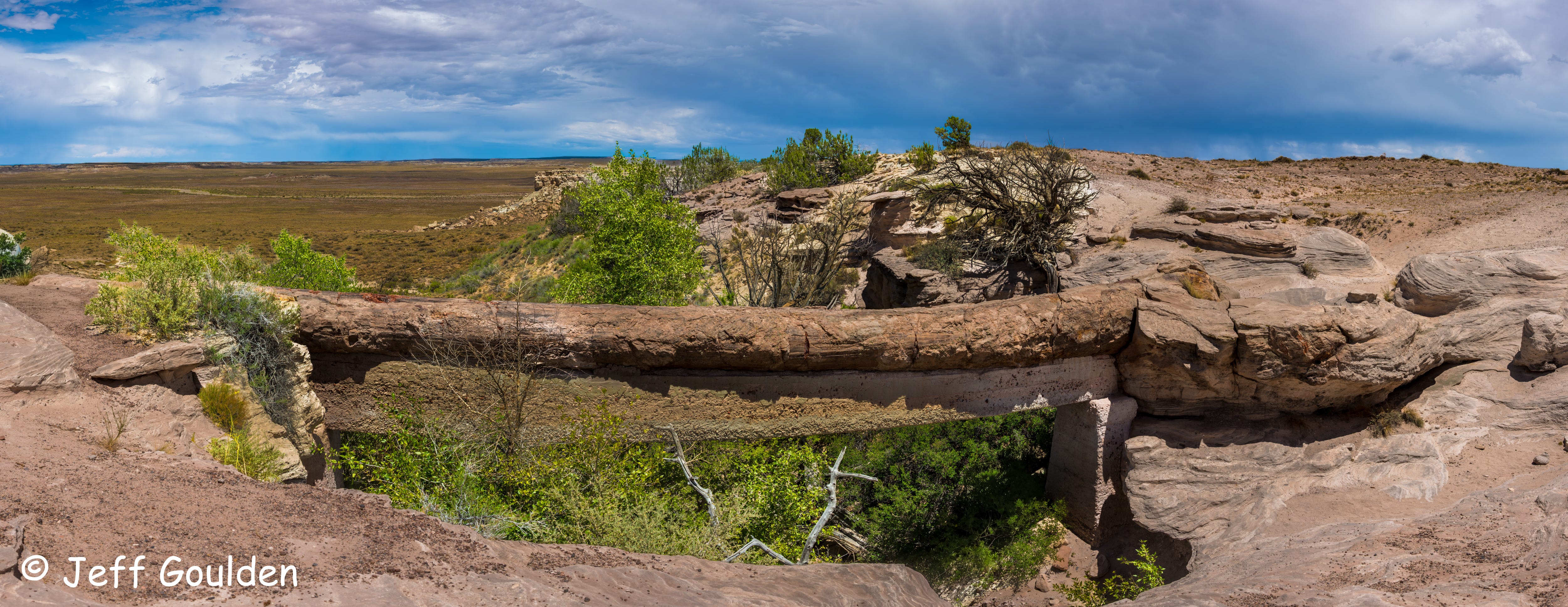
As I left Blue Mesa, the petrified logs took center stage. At Agate Bridge, one of the park’s most impressive examples of a fallen log spans a natural wash, looking remarkably like the tree it once was.
There was something else to notice at Agate Bridge. I haven’t seen much wildlife in Petrified Forest, but the occasional encounter can make a long day of looking at rocks feel a little more personal. Ravens are common around the trailheads. On one particularly hot day, I saw several perched around the Agate Bridge area, panting with their beaks open as they tried to cope with the heat.

When Trees Became Stone
The trees that eventually became Petrified Forest’s famous logs lived more than 200 million years ago.
When they were toppled, flowing water carried them into low-lying areas where they were buried by sediment and volcanic ash. Over immense periods of time, mineral-rich water moved through the buried wood. Quartz gradually replaced the original organic material, while minerals such as iron and manganese contributed to the remarkable colors preserved in the logs.
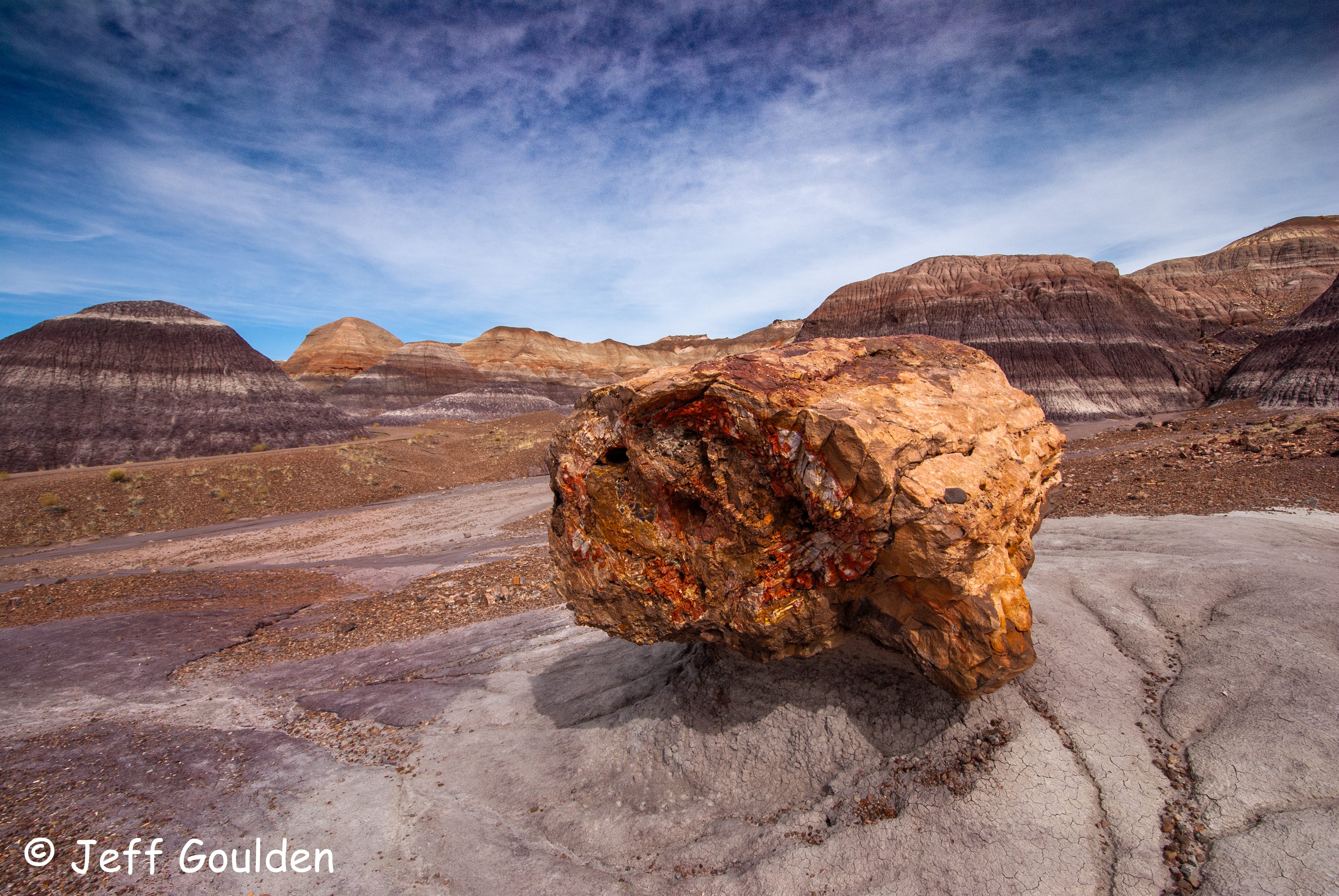
Over the eons, the sediment covering the petrified logs eroded and began exposing them once again. Even today, more petrified logs remain buried beneath the surface, waiting for erosion to reveal them.
If you have never touched petrified wood, the experience is surprising. It may look like wood, but its weight and hardness quickly tell you otherwise. Some logs have broken cleanly enough to reveal the growth rings of the original tree. Millions of years later, evidence of annual growth is still preserved in the rock.
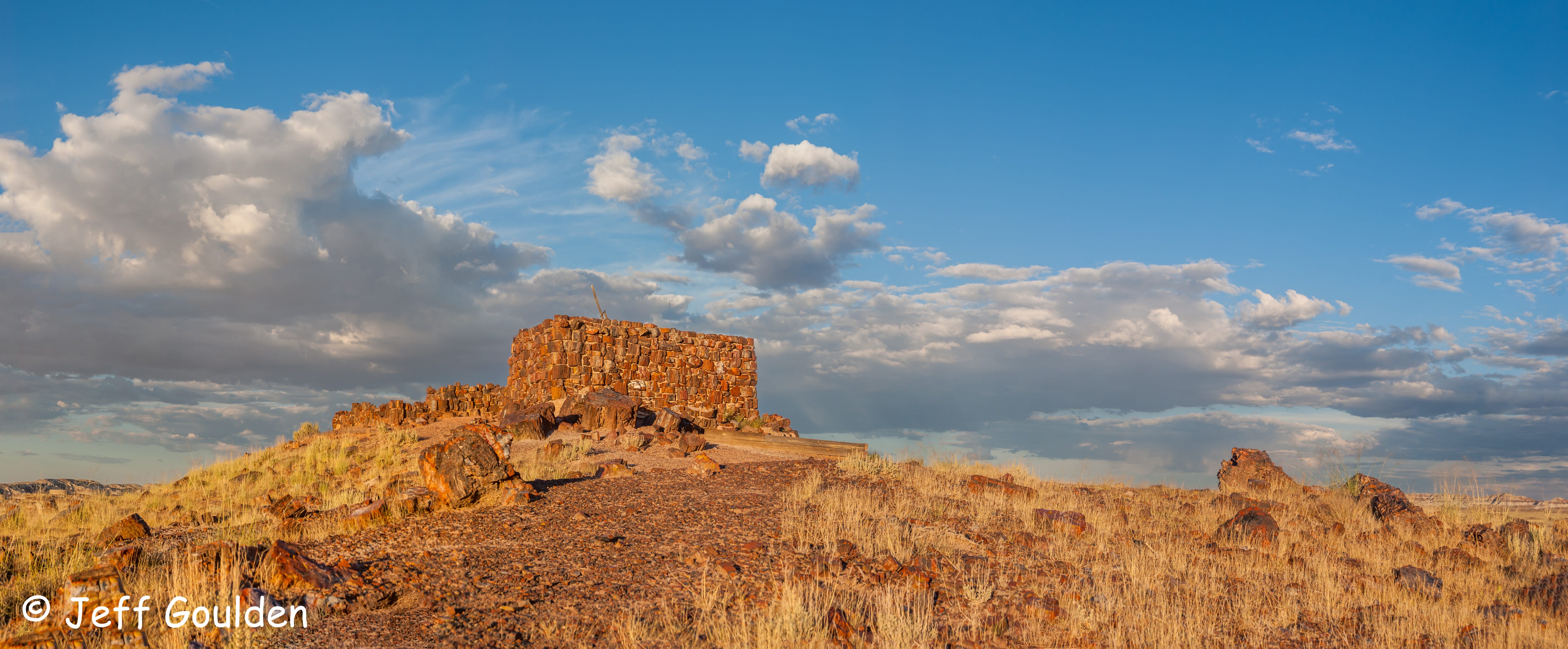
Agate House
One evening, on the walk to Agate House, I encountered a desert cottontail sitting beside the trail. He looked at me, and I looked at him. I could almost hear him asking, “Are you going to take my picture or not?”

Of course I did. Then we went our separate ways.
At Agate House, pieces of petrified wood were incorporated into the walls of a small pueblo and held together with mud mortar. The trees had turned to stone millions of years earlier. Now that stone had become part of someone’s home. The people who lived in this area didn’t simply live among the petrified wood. They used it to make tools and as a building material.
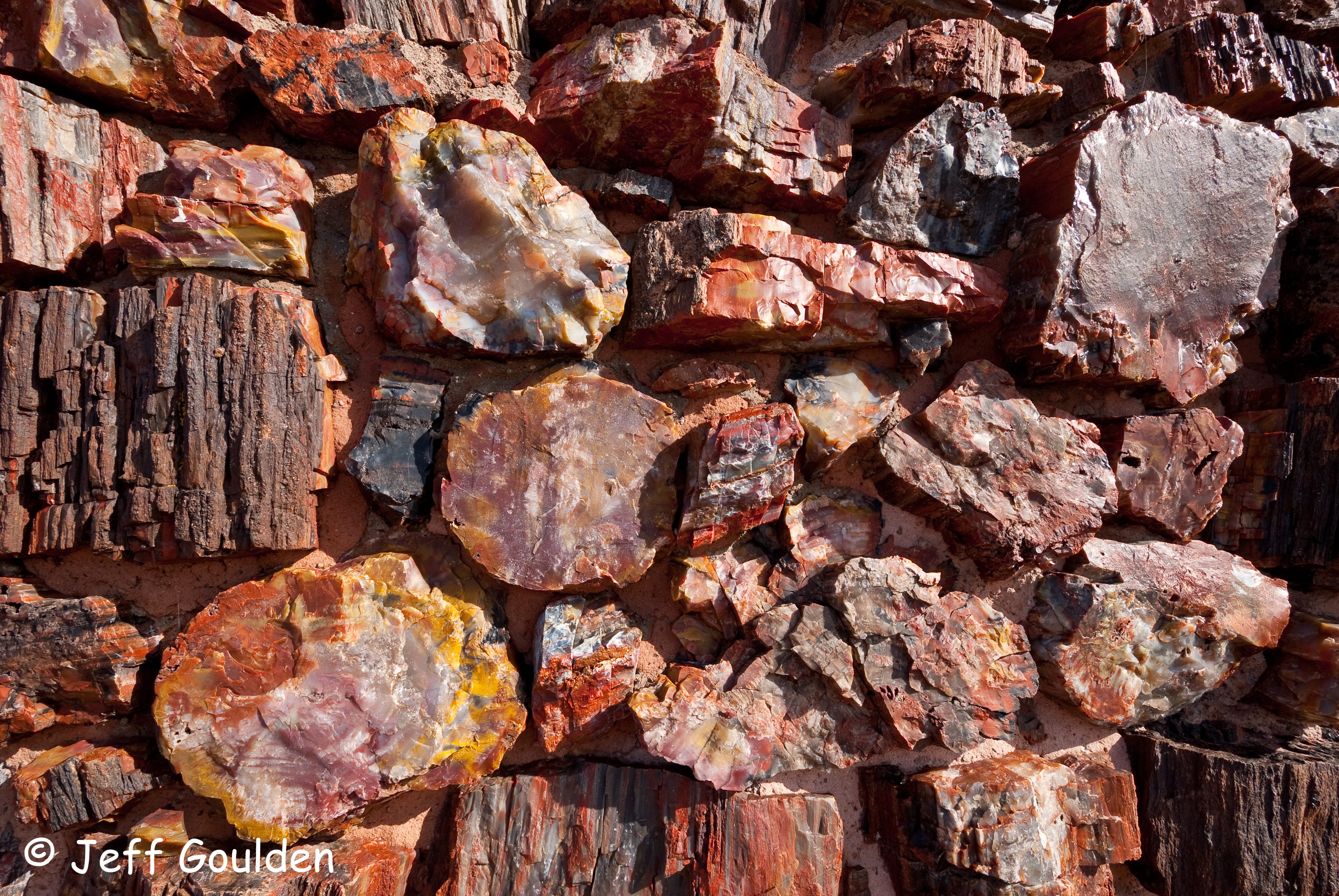
Standing there, it was difficult not to think about the people who lived in this rugged landscape a thousand years ago and made the best use of what the land provided. Their lives are gone, but traces of them remain.
The Walk Back
By the time I left Agate House, the afternoon was giving way to evening. On the walk back, the setting sun swept across the landscape and caught the scattered petrified logs. The light brought out colors and textures that hadn’t been apparent earlier in the day.
The logs took on an other-worldly glow.
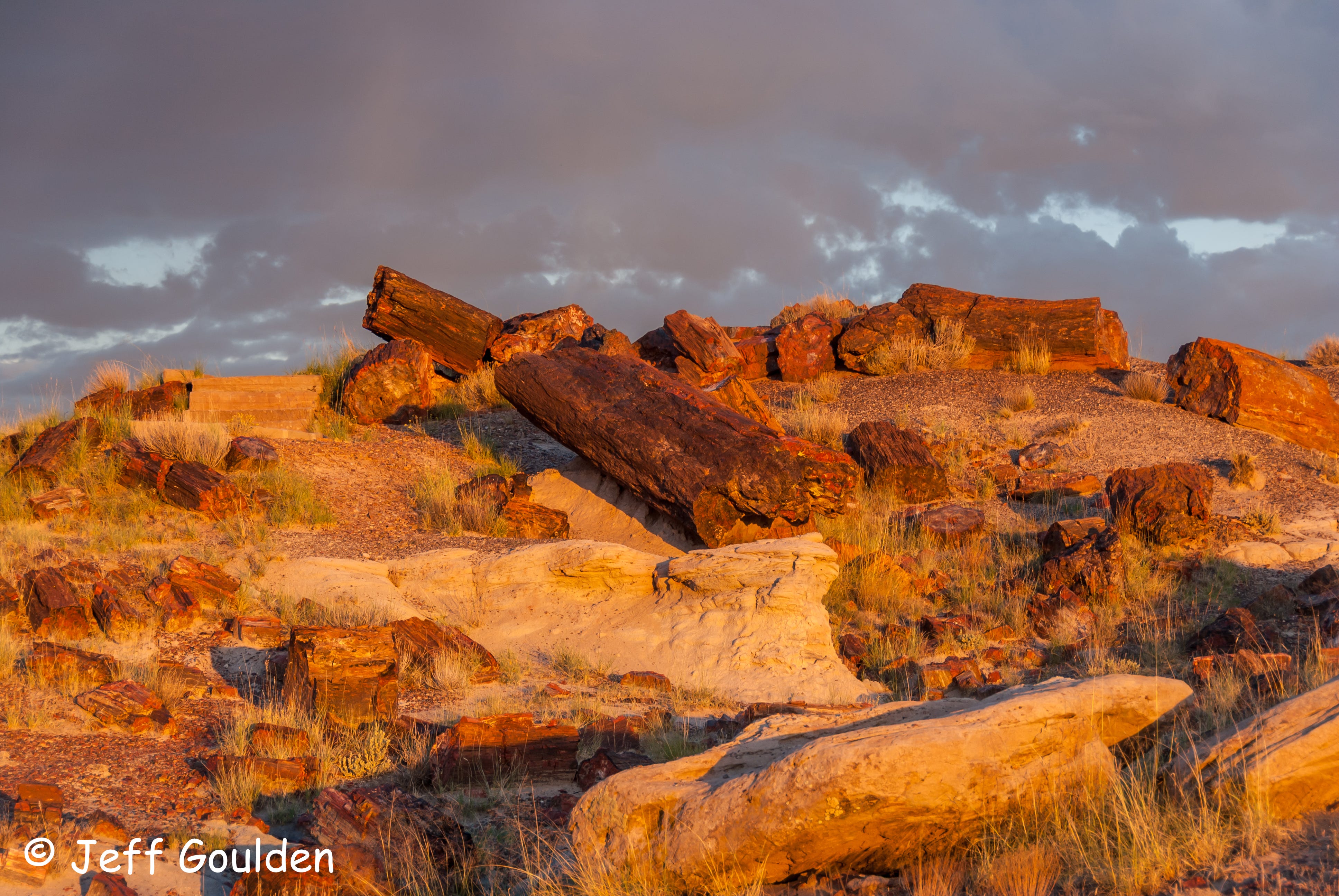
For a few minutes, something that had been a tree more than 200 million years ago became the subject of a photograph that I made in the present.
The petrified logs have survived unimaginable stretches of time. The landscape around them is still changing as erosion exposes what has been buried for millions of years. We can’t stop that natural process—and we shouldn’t try. But we can choose not to accelerate it.
Perhaps that’s the real Golden Rule of Petrified Forest: leave this place as you found it. What has survived for millions of years deserves the chance to remain here for those who come after us.
See Jeff’s previous articles at the Substack Archive.
See more of Jeff’s work at Jeff Goulden Photography.
Jeff Goulden is a nature, landscape, wildlife photographer and writer based in Flagstaff, Arizona. His work has appeared in Audubon, National Geographic, Nature Conservancy, Wilderness Society and other publications.

See more of Jeff's photography at www.JeffGouldenPhotography.com. Downloads are available at Getty Images. Selected fine art prints and other unique photo products are available at Fine Art America.
A delightfully written account of history combined with deeply emotional feelings shared by the photographer. I experienced a sense of spiritual reckoning between the past and the present.
Margie Goulden
Very nice. It really is a magical place and your photography and writing enhance the beauty, history and invite us to take a closer look. Thank you Jeff, I really appreciate your photography and writing.